Showing posts with label taiko ds. Show all posts
Tuesday, June 21, 2011
Brawl among the 7 islands! Taiko DS 2 Boss Battles
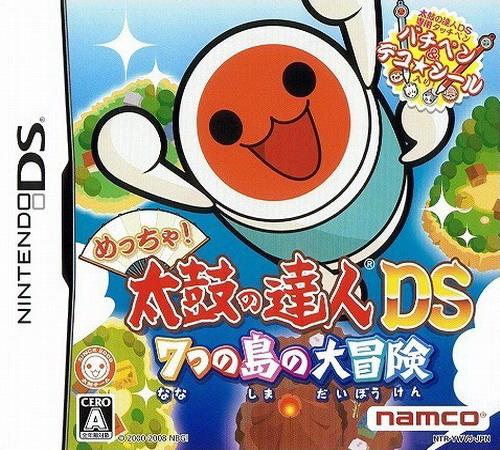
Meccha! Taiko no Tatsujin DS is the pioneer game in the Taiko series for boss battles based on hitting notes and avoiding obstacles along the way, and though it is simplistic, it paved the way for slightly more complex rhythm battle systems with more mechanics like the ones seen in Taiko DS3 and Taiko Wii 2. In the story mode, Don-chan is sucked into a vortex and lands himself on the distant seven islands, where he is tasked with becoming the master of the Taiko Dojos on each of them. Along the way there are stages like multiplayer duels with computer AI and challenges like getting a certain score on a song (a much better way to present them unlike in DS1, where the challenges were sent through letters which could be easily ignored)
Tuesday, December 21, 2010
Battle against the spirits! Taiko DS 3 Boss Battles
The bosses of Taiko no Tatsujin DS3 are all monsters and ghosts from Japanese mythology, and are fought RPG-style to the tune of one of the unlockable songs in the game. Note that since it's a DS game, high-quality videos are not easy to come by, but if there's any, we'll place them here right away!
Basically the story revolves around Don-chan being pulled into a portal to ancient Japan, where he meets a young girl tanuki named Ponko, who had just recently lost her father and wants your help to find him. Your adventure takes you throughout Japan, clearing bosses and beating monsters along the way in traditional, random-encounters typical of RPGs.
Spoiler warning ahead.
Basically the story revolves around Don-chan being pulled into a portal to ancient Japan, where he meets a young girl tanuki named Ponko, who had just recently lost her father and wants your help to find him. Your adventure takes you throughout Japan, clearing bosses and beating monsters along the way in traditional, random-encounters typical of RPGs.
Spoiler warning ahead.
Sunday, September 12, 2010
Wednesday, September 8, 2010
Meccha! Taiko no Tatsujin DS: Nanatsu no Shima no Daibouken! secret songs
Monday, September 6, 2010
Taiko no Tatsujin DS: Dororon! Youkai Dai Kessen! secret songs
Tuesday, August 17, 2010
Taiko DS3 secrets- It's now official!
Soon, the hidden unlockables of Taiko DS3, previously only known to hackers, will finally be made available to everyone!
Monday, August 16, 2010
Taiko DS3 secrets!
Get the most out of Taiko no Tatsujin DS: Dororon! Youkai Dai Kessen! There's a bunch of hidden content Namco wants you to unlock, when the time is right. However, you know the internet types. They hack to any and all in-game content first hand, so everything is let loose before Namco can say a word. And I've put it all here.
Wednesday, August 11, 2010
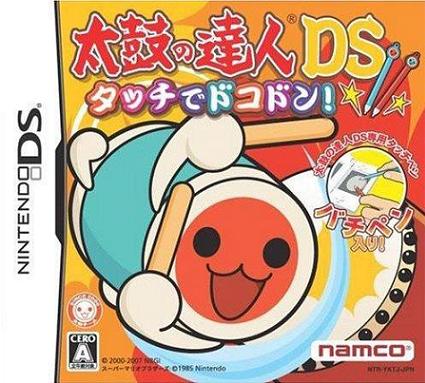
Taiko no Tatsujin DS: Touch de Dokodon! song list
The first Taiko no Tatsujin game to be released on the Nintendo DS, on July 2007, and seen as Namco testing the waters of the casual gaming crowd that Nintendo managed to pull in with the new touchscreen controls, as a large part of this game was showing off the new control method, which is a first for Taiko. Although the song list is somewhat lacking at a time where 40+ songs seemed to be the standard, and there were many repeat songs from past entries, it's not just a few songs with touch controls slapped onto them; DS1 marks another turning point in the series where major additions made remain for many later Taiko console games.
Most notable is the addition of Don-chan's room, a sort of central hub for the side options of the game. Aside from the already present features like changing Taiko sounds and the tutorial (which no longer uses Onpu no Uta as background music), new features was a mailbox for Don-chan to receive messages from the in-game characters as the player racks up his play time and achievements. Some characters even send you gifts, ranging from secret songs to costumes and Taiko sounds. The other major introduction in DS1 was the ability to change Don-chan's body color and clothing, which proved to be very popular and became a main feature in almost every Taiko game since, even in the arcade. Along with the game, players also received two special styluses (called bachi-pen) to play Taiko on the DS touch screen. It has wireless multiplayer of up to four players using only one cart, and a Taiko Dojo which you can challenge everyday to raise your Taiko Rank, influenced in part by Brain Age, a massively popular brain training simulator.
A game-breaking bug was discovered, in that when all three save slots are used up and all three Dons have costumes on them other than the default one (note 'all three', if one Don is using the default colors and no costumes, the bug won't activate), the game freezes on the title screen and refuses to load anything. You won't even be able to delete a save file! This was patched on June 30 2009, when Namco released an official statement. Anyone with the defective game can trade it in for the updated 1.01 version for free, which has 'updated version' under the game title. No other features were added other than to patch the bug.
~ Theme song ~
Kimi ni Touch! (キミにタッチ!)
Monday, August 2, 2010
Meccha! Taiko no Tatsujin DS: Nanatsu no Shima no Daibouken! song list
Second Taiko no Tatsujin game for the Nintendo DS, released in April 24 2008. The game is packaged with two 'bachi-pen' like in the first game, and a sticker sheet. The sticker sheet is filled with round stickers that apparently are used to replace the pictures on the top of the bachi-pen for decoration. Since they're one-use only, collectors will probably not see it as a great idea, but at least it's an extra.
The main adventure mode involves Don-chan challenging dojos through seven different islands, and all the stages involve clearing certain objectives (such as achieve a certain score on a certain song, etc.), replacing the need for issuing challenges through letters which are pretty easy to miss. Meccha! Taiko no Tatsujin DS is the first Taiko console game to feature boss fights, obstacles that cover the scroll bar, and bomb notes to trip up the player, which along with costumes and in-game letters have become regular additions to console Taiko. When the Taiko sounds are changed, the Taiko on the lower screen will change to a different picture, unlike the first DS Taiko. This is carried over to Taiko DS3. The song list, at the time of release, was only second to Taiko Portable 2 in terms of total number, and exceeds the final PS2 game by 2 songs.
The adventure mode here is the first of its kind on any Taiko game, which has never had a proper story mode before this. Through this game, Namco Original songs were made specially for the villains of the story, a trend that would continue to later games. The villains introduced here, the Dokon-Dan, gained immense popularity and have become staple characters and make appearances, both major and minor, in nearly every subsequent console Taiko game.
List of boss battles
~ Theme song ~
Nanairo Harmony (七色ハーモニー)
Sunday, August 1, 2010
Taiko no Tatsujin DS: Dororon! Youkai Dai Kessen! song list
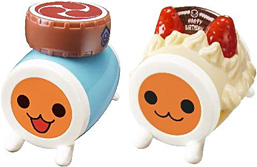
Youkai Dai Kessen! is the 3rd Taiko no Tatsujin game for the Nintendo DS. It was released on July 1st 2010, and features an RPG mode as its main attraction, where you travel across Japan and face random encounters. Monsters are beaten if you hit notes correctly and there's even a leveling up system and stats! Other staples of Taiko DS are all here, including the costumes and color customizations for Don-chan, wireless multiplayer, and the Everyday Dojo. This is the first Taiko game to include a hidden password system to unlock bonus content, which was actually a collaboration with McDonalds' Happy Meals, along with advertising in Taiko 14 some time later. The bachi-pens given with the game are coated in gold paint, although there isn't a sticker sheet like in DS2.
One of the best selling Taiko games of the 'Nintendo generation' (consisting of 3 DS and Wii Taiko games released back-to-back without swapping hardware companies), staying in Japan's top 10 weekly sales for about a month and lingered in the top 50 for more than half a year subsequently. Key to its popularity wasn't just the RPG mode, but the great selection of songs overall, which included favorites like Hatsune Miku song Melt and new fan favorites in Namco Original like Tenyou no Mai.


Secret passwords
McDonalds promotion
Boss encounter list
One of the best selling Taiko games of the 'Nintendo generation' (consisting of 3 DS and Wii Taiko games released back-to-back without swapping hardware companies), staying in Japan's top 10 weekly sales for about a month and lingered in the top 50 for more than half a year subsequently. Key to its popularity wasn't just the RPG mode, but the great selection of songs overall, which included favorites like Hatsune Miku song Melt and new fan favorites in Namco Original like Tenyou no Mai.
Secret passwords
McDonalds promotion
Boss encounter list
~ Theme song ~
Subscribe to:
Comments (Atom)